 Although the Senegal economy has experienced a series of ups and downs over the years, one constant source of the country's income has been through the trading industry. More specifically, trade of the Senegalese peanut cash crop is the most traditional form of revenue in Senegal. Other common trading goods include fish, petroleum and phosphates; most goods are exported and traded with neighboring European countries and the United States (see image to the left for a visual of U.S.-Senegal trading history). As indicated by the chart, Senegal has a significantly higher export than import rate, making trade a major source of income. Senegal has also profited from a fairly lively tourism industry, specifically in its major city of Dakar.
 During the rule of President Diouf from the early '80s to 2000, the government began to support a shift away from state involvement in the economy and towards more privatization in areas such as agriculture and textiles. Although this initiative continues to be supported by President Wade, the current government has run into issues with increasing numbers of unionized workers, thus hindering the attempt to implement a privatization policy.
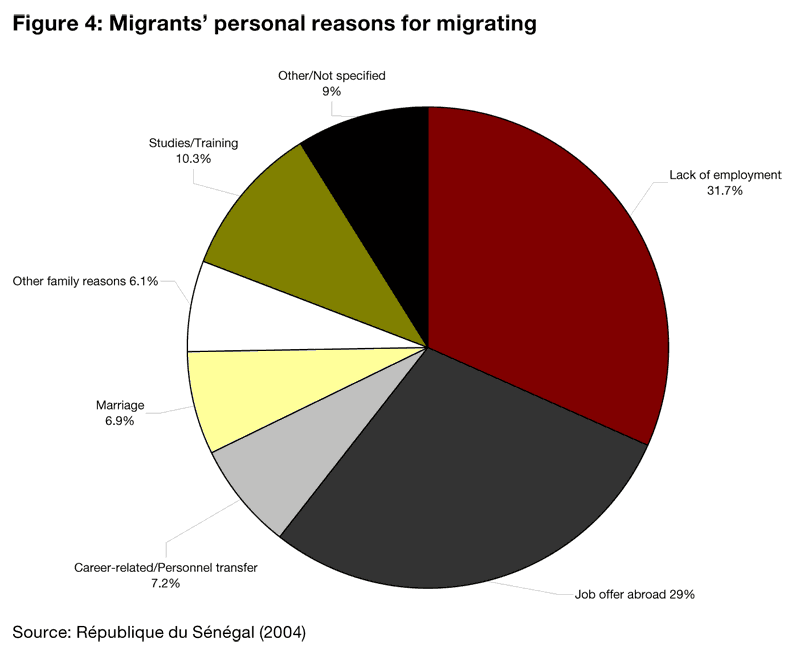 As of 2007, Senegal suffered from a fairly high unemployment rate (48%) and percentage of citizens living in poverty (54%). Although many citizens work in the agriculture industry, there have been struggles with maintaining workable farmland. Given the widespread low standard of living in the country, it is hardly surprising that many Senegalese citizens have left the country in search of work in Europe, or even the United States. The figure to the right provides a visual representation of Senegalese migrants' reasons for migrating, with unemployment being the most common motivation.
The country has also faced some economic difficulties due to a steep population increase and unmonitored migration from rural areas into Dakar in the past 40 years. In light of the potential negative aftermath of such recent developments, Senegal's economy has more recently been largely aided by foreign assistance. In particular, the Millennium Challenger Corporation (United States aid initiative) has provided Senegal with $540 million in aid which will be put towards the creation of a new airport in Dakar and improving local roads and farmland. Therefore, despite the economic downturn in recent years, it appears that foreign aid will be of great help in getting the Senegal economy back on its feet.
Sources:
Britannica, "Senegal: Economy." Britannica Academic Edition. February 22, 2012. http://www.britannica.com/EBchecked/topic/534445/Senegal/55050/Economy
Central Intelligence Agency, "Senegal." United States Government. February 8, 2012 https://www.cia.gov/library/publications/the-world-factbook/geos/sg.html
Drew Hinshaw, " Senegal's Economy to Grow 4.4% in 2012 as Power Output Rises." Bloomberg Business Week, September 13, 2011. http://www.businessweek.com/news/2011-09-13/senegal-s-economy-to-grow-4-4-in-2012-as-power-output-rises.html
